








Non gamstop bank transfer casinos rely on cross-border SWIFT and SEPA wires
Offshore gambling operators outside the British regulatory framework process bank transfers through cross-border SWIFT and SEPA networks rather than domestic UK clearing systems. Since 31 March 2020, every gambling company licensed by the Gambling Commission must integrate with GAMSTOP as a strict licence condition. Any site operating as a non gamstop casino bank transfer destination therefore lacks a British operating licence and cannot connect to domestic sort code clearing.
| Banking Metric | British Licensed Casinos | Non-GAMSTOP Offshore Sites | Player Risk Exposure |
|---|---|---|---|
| Payment Network | Pay.UK Faster Payments | International SWIFT and SEPA | Cross-border wire screening and rejection |
| Settlement Time | Same-day real-time clearing | Multiple working days | Delayed access to deposited and withdrawn funds |
| Currency Fees | Zero GBP conversion fees | FX conversion plus intermediary deductions | Direct loss of capital on both deposit and payout |
| Dispute Protection | ADR referral after 8 weeks | No recognised dispute scheme | No legal recourse if payouts are blocked |
Domestic transfers at regulated operators settle in real time and compare favourably against international wire transfers that require multiple working days and incur intermediary banking deductions. Players prioritising verified domestic payment rails can review our assessment of the safest bank transfer casinos operating under British supervision.
Intermediary correspondent banks deduct handling fees from offshore wires
Correspondent banks routing international SWIFT payments between Great Britain and offshore jurisdictions deduct fixed handling charges directly from the transfer principal. Because unlicensed gambling businesses lack direct settlement accounts with British clearing banks, every bank transfer casino non uk transaction passes through third-party intermediary institutions.
These routing banks levy administration fees before the money reaches the destination cashier or returns to a British current account. The Gambling Commission warns that unlicensed sites also lack secure payment systems, exposing players to both unexpected wire deductions and payment fraud.
Foreign licences do not legalise non gamstop bank transfer casinos in Britain
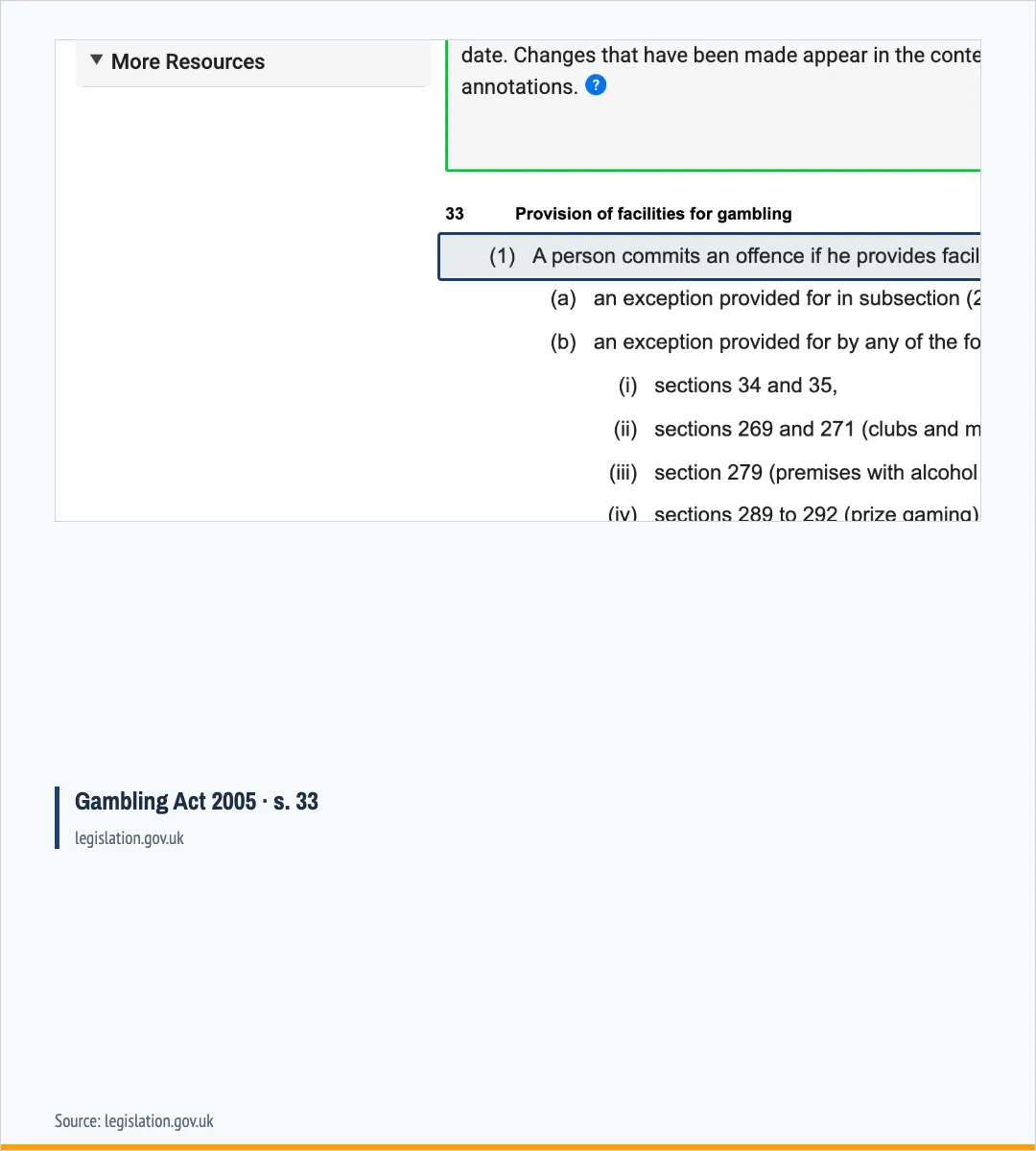
An overseas gambling permit does not authorise an offshore operator to accept bank transfers from consumers located in Great Britain. Under Section 33 of the Gambling Act 2005, providing facilities for gambling to British residents without a Gambling Commission operating licence is a criminal offence, regardless of where the business is based.
The Gambling Commission explicitly confirms that a gambling licence issued in another country does not permit an operator to serve consumers in Great Britain. When an individual sends a wire transfer to non gamstop bank transfer casinos, the transaction funds an illegal gambling facility that sits entirely outside British consumer and gambling protection rules. Before initiating any direct banking payment, consumers should verify that the operator displays a valid Gambling Commission licence.
Pay.UK bars unlicensed offshore casinos from the Faster Payments network
Unlicensed offshore gambling sites cannot access the domestic Faster Payment System managed by Pay.UK because membership requires strict British regulatory compliance. Operational since 2008, the Faster Payment System facilitates real-time sterling transfers 365 days per year and supports individual payments of up to 1 million pounds, subject to individual bank limits.
Offshore cashiers sometimes display British bank logos or claim to offer Pay by Bank, yet they route the actual funds through unregulated overseas payment aggregators. Genuine domestic instant clearing is restricted to regulated merchants, which we detail on our page covering an instant bank transfer casino uk.
Sending sterling to offshore bank accounts incurs double currency conversion
Transferring British pounds via wire transfer to an overseas casino account triggers foreign exchange conversion charges on both the deposit and any subsequent withdrawal. Because unlicensed operators hold merchant accounts outside Great Britain, incoming GBP wires are converted into the cashier's base currency at the bank's retail exchange margin.
Under Gambling Commission and HMRC rules, customer gambling winnings in Great Britain attract 0 tax, as duty falls on the operator's Gross Gambling Yield, and betting does not constitute trading. However, when withdrawing funds from an unlicensed overseas cashier, double currency conversion and international wire fees erode the payout value before the money arrives in a UK current account.
UK current accounts risk compliance closures over unlicensed gambling wires
British retail banks monitor cross-border wire transfers and can freeze or close personal current accounts that transact with unlicensed gambling operators. Financial institutions in Great Britain enforce strict anti-money laundering controls and compliance checks aligned with the Gambling Act 2005 and the Gambling Commission credit card prohibition. If bank closures and account flags are adding financial strain, the National Gambling Helpline (run by GamCare) on 0808 8020 133 offers free support 24 hours a day.
While licensed operators must reject credit card funding and process transparent domestic bank transfers, illegal sites often encourage irregular international wires or credit-funded deposits. Repeatedly sending direct banking payments to high-risk overseas jurisdictions flags the sender's account for manual compliance investigation.
Mismatched merchant category codes trigger bank anti-money laundering reviews
International bank transfers to unlicensed casinos frequently carry disguised payment references or mismatched merchant category codes that trigger automated bank security alerts. Because UK banks block illegal gambling transactions, offshore operators instruct players to wire funds to accounts registered under unrelated commercial sectors.
When a British bank detects a discrepancy between the stated beneficiary business and the actual transaction pattern, compliance teams suspend the transfer. The Gambling Commission notes that illegal sites also pose severe data protection hazards, exposing personal banking credentials to identity theft and financial fraud.
Unlicensed cashiers route bank transfers through unregulated payment shell firms
Offshore casino cashiers process incoming wire transfers through third-party shell companies because legitimate financial institutions refuse to bank illegal gambling businesses. When a player initiates an Open Banking or wire deposit on an unlicensed site, the recipient name on the bank statement rarely matches the casino domain.
- Beneficiary bank accounts are registered to unrelated offshore shell corporations.
- Payment descriptors omit gambling references to mask transaction origins from bank filters.
- Personal sort code and identity data pass through unverified payment processors.
- Standard recall procedures fail when funds settle via shell intermediaries.
The Gambling Commission highlights that unlicensed operators lack secure payment systems and proper regulatory oversight. Routing sort code and account details through opaque shell firms strips the sender of standard banking recall rights and exposes sensitive financial records to unauthorised third parties.
Withheld wire transfer payouts at non-UK sites leave players without legal recourse
Players whose bank transfer withdrawals are blocked by an unlicensed casino have no access to British dispute resolution or regulatory enforcement. The Gambling Commission warns that illegal gambling sites frequently withhold payouts or impose unattainable withdrawal thresholds, leaving consumers with zero recourse when funds disappear.
At a British-licensed operator, a consumer must first complain directly to the business and, after 8 weeks, can escalate unresolved financial disputes to a free, independent Alternative Dispute Resolution (ADR) provider (excluding general customer service issues). Because ADR schemes do not cover illegal operators, consumers can only report suspicious activity via the Gambling Commission's confidential reporting service, or consult our verified list of bank transfer casinos for regulated options.
GAMSTOP exclusions require manual deactivation after your chosen period ends
Operated by The National Online Self Exclusion Scheme Limited (registered in England and Wales), GAMSTOP blocks access to all online gambling companies licensed in Great Britain for a chosen minimum period of 6 months, one year, 5 years, or 5 years with auto-renewal.
If a user selects the five-year auto-renewal option, a new five-year exclusion automatically commences when the current period concludes.
A mandatory full-day cooling-off period applies before GAMSTOP lifts
Deactivating an expired GAMSTOP restriction requires contacting the GAMSTOP Contact Centre and completing a mandatory minimum 24-hour cooling-off period. The system never removes a block automatically when the initial 6 months, one year, or 5 years elapse.